It is law within the UK that every item of precious metal sold such as Platinum, Gold, Silver is stamped labelling the item with the type of metal it is. Platinum pieces which weigh less than 0.5 grams, 18ct Gold and Palladium pieces weighing less than 1.0 gram and Silver pieces weighing less than 7.78 grams are except from hallmark.
At Diamonds Factory all our products are hallmarked as per UK hallmarking law from London Assay Office (The GoldSmith Company)
Where Hallmarking Began
The Goldsmiths' Company Assay Office is the oldest assay office in the United Kingdom. It has provided hallmarking services since The Goldsmiths' Company was founded in the 1300s. The company received its royal charter in 1327 and ranks 5th in order of precedence of the 12 Great Livery Companies of the City of London.
Hallmarking dates back to the 1300s when Edward I of England passed a law requiring any item made of silver, which was offered for sale, to be at least of equal quality as that of the coin of the realm (silver currency). The wardens of The Goldsmiths' Company were tasked with visiting workshops in the City of London to assay (test) silver articles. If these articles were found to be below standard they were originally destroyed and the metal forfeited to the King. If they passed, each article received the King's mark of authentication - the mark of a leopard's head. By 1478, there were several hundred workshops and merchants manufacturing silver articles in the City of London. It was not possible for the wardens to visit them all so the merchants were ordered to bring their items to Goldsmiths' Hall for testing and marking and a permanent Assay Office was established in the building. This is the origin of the term hallmark - struck with the King's mark at Goldsmiths' Hall.
In 1544 the Goldsmith's Company adopted the King's mark as their town mark and the mark of the leopard's head is now internationally recognised as the mark of this assay office.
Today
The Goldsmiths's Company Assay Office is still based at Goldsmiths's Hall and remains the oldest company in Britain to be continually trading from the same site. However, it also has two satellite offices; at Greville Street in Hatton Garden in the heart of the London jewelry quarter and within a high security complex near London's Heathrow airport. It now has a new off-site facility within the Dalston-based jewelry manufacturer, Allied Gold. This is the first time in the Assay Office's 700 year history that it has opened permanent hallmarking services on a customer's premises.
In addition to hallmarking, the office has now expanded its range of services to support the jewelry trade and enforcement authorities. It offers a variety of specialist analytical services including nickel, lead & cadmium testing, antique silver dating, non-destructive compositional analysis, plating thickness measurement and a melt and assay service for scrap precious metal carried out in their fully independent on-site laboratory. Other services offered are a jewelry valuation service, laser marking, trading standards assistance, high quality photography and a comprehensive range of training and educational seminars, lectures and specialist events.
Know More








 Unlock private sale access
 Birthday privileges
 Plus a world of exclusives, curated for you.



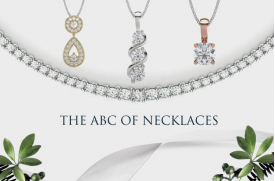
When it comes to diamond jewelry , many people focus solely on the pendant, overlooking the importance of the chain. However, selecting the right chain for your diamond pendant can significantly enhance the overall appearance of your jewelry. Keep reading for tips on how you can choose the perfect chain so that your diamond pendant shines bright.
Prong Setting Diamond Solitaire Pendant
$189
Prong Setting Diamond Solitaire Pendant
$722
Bezel Setting Diamond Solitaire Pendant
$336
Prong Setting Diamond Solitaire Pendant
$178
Prong Setting Diamond Solitaire Pendant
$343
Prong Setting Diamond Solitaire Pendant
$382
4 Prong Setting Solitaire Pendant
$93
4 Prong Setting Solitaire Pendant
$203
Pendant chains and styles

Just like there are different designs of pendants, chains come in a variety of styles, too. Each chain type offers a different aesthetic and support to the diamond. Consider the popular chain options below when choosing one to accompany your diamond pendant:Different chain metals
Factors involved in choosing the right chain

Other than the chain style, there are a few factors to consider when choosing the right chain for your diamond pendant.Neckline
The neckline of your outfit plays a significant role in determining the appropriate chain length. For instance, if you’re donning a V-neck top, a longer chain falling just above the neckline will be perfect for your diamond pendant. For tops with higher necklines, choose a chain shorter in length. The chain length should ensure that the pendant sits at the most flattering spot on your chest.Pendant size
The chain is here to support your diamond pendant. So, if you’re wearing a delicate piece, go for something like a dainty box chain. Or, for larger pendants, opt for a sturdier chain to support the weight.Personal style
Everything comes down to personal style, even when choosing your chain. If you’re someone who likes to keep their style minimal, opt for a chain for your diamond pendant that is sleek and thin. For a more bold, statement look, a chunky chain will be a perfect match.Conclusion
We've all heard the phrase 'every detail matters.', and it remains true for our jewelry as well. Choosing the right chain for your diamond pendant is essential for creating an appealing look. So, when choosing a chain that perfectly complements your diamond pendant, check out our collection at Diamonds Factory.